
The Disappearing Voices: Why Independent Journalism Matters More Than Ever
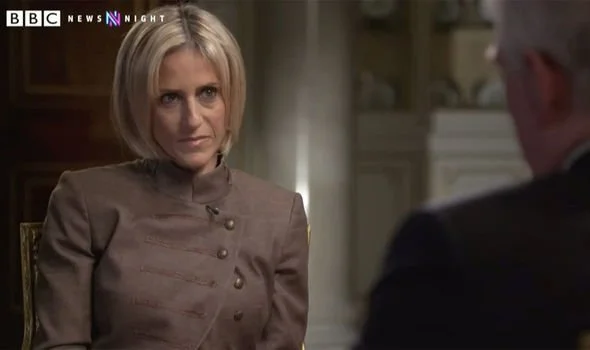
Emily Maitlis, BBC Newsnight
I will be honest with you. I wanted to be a journalist. Straight out of Poly, I landed an internship in travel trade journalism — with Travel News and Executive Travel Magazine, owned at the time by ABC Travel Publications, housed at 242 Vauxhall Bridge Road. I was so lucky to have the editorial guidance of Mike Toynbee, Beverley Howell and Catherine Chetwynd and was completely hooked by everything about the production of a print weekly newspaper and a monthly newstand magazine. The heady cocktail of the newsroom banter, the telex machines (!!!) the ancient typewriters and the nightly hosted events that still keep the industry turning now. Heady, exciting days. I loved all of it but wasn’t built for the newsroom and so I ended up in PR.
While I have never regretted that path — it has given me a career built around storytelling, communication and helping organisations find and use their voice well well - my love affair with journalism never ended. If anything it deepened. Because working alongside journalists, understanding how they think, what they value and what they will and will not compromise on, has shaped everything about how I approach communications.
Which is why what is happening to independent journalism right now troubles me as much as anything I have seen in my professional life. The erosion is real, it is accelerating, and it matters far beyond the media industry itself.
A tradition worth fighting for
There is a thread running through the best of British journalism that is easy to take for granted until it starts to fray.
It is the thread of independence. The reporter who asks the question no one else will. The correspondent who files from somewhere dangerous because the public deserves to know. The investigator who pursues the story for years because it is true and it matters, regardless of who it implicates.
We have produced some of the finest practitioners of that tradition the world has seen.
Emily Maitlis, whose Newsnight interview with Prince Andrew remains one of the most remarkable pieces of accountability journalism in recent British broadcasting — and who later spoke publicly about the political pressures she experienced on BBC editorial decisions, which itself says everything about the institutional independence argument at the heart of this piece.
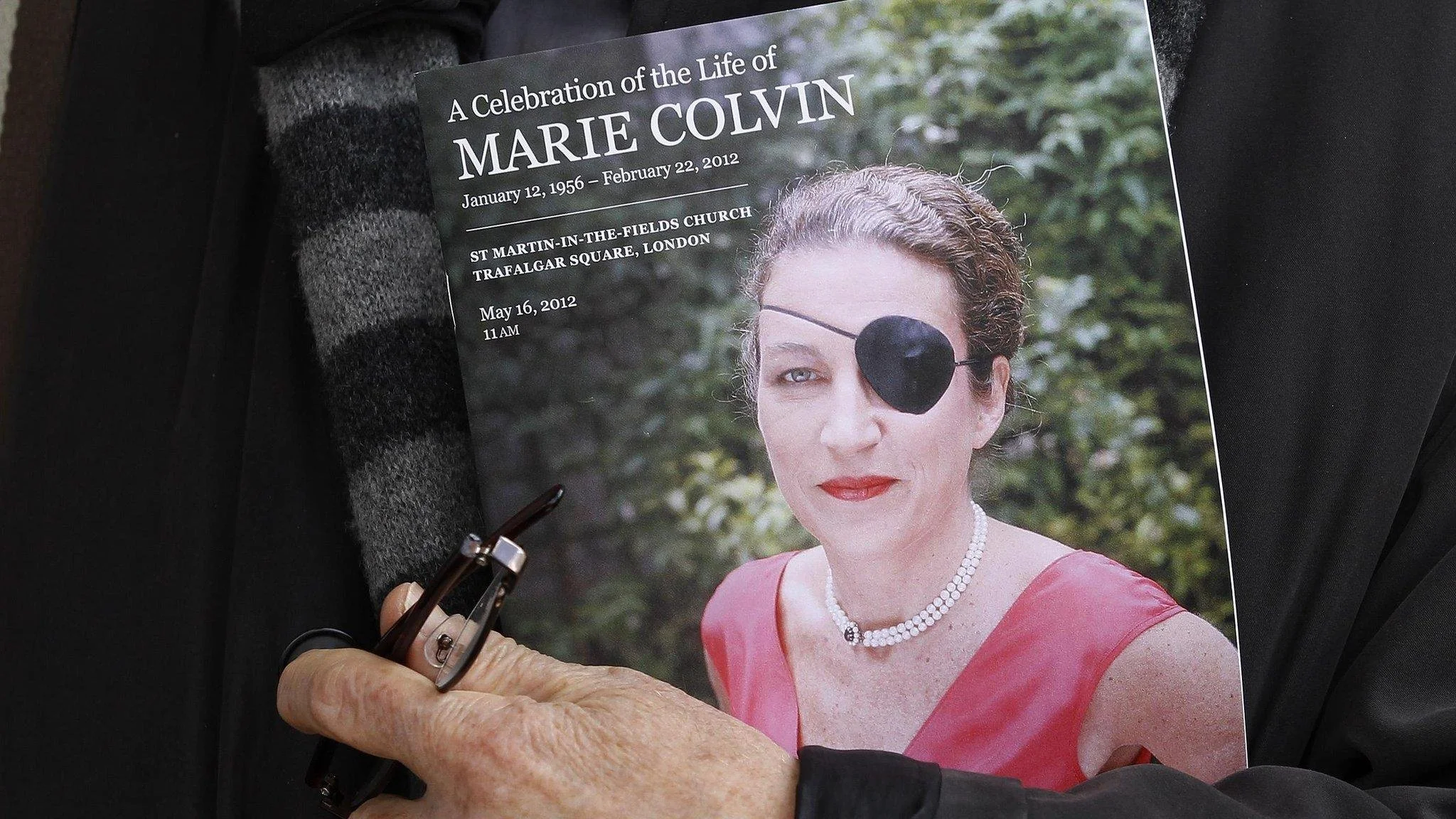
Marie Colvin, the Sunday Times war correspondent who lost her eye in Sri Lanka and went back to reporting from the most dangerous places on earth because she believed the public had a right to witness what was happening there, and who was killed in Homs in 2012 doing exactly that. Nick Davies, the Guardian journalist who pursued the phone hacking scandal for years against sustained resistance, brought down the News of the World and triggered the Leveson Inquiry and whose book Flat Earth News remains the most honest account of what commercial pressure does to journalistic standards.
Before them, John Humphreys on the Today programme built the 6.10am interview into something prime ministers genuinely dreaded — unsparing, unignorable and completely unimpressed by rank or office. Jeremy Paxman turned political accountability into must-watch television, his pursuit of Michael Howard in 1997 remaining the defining image of what it looks like when a journalist simply will not let power escape. And Jon Snow, thirty years at Channel 4 News, consistently outspoken and never captured by establishment thinking, whose public honesty about the media's own failings was more candid than most journalists ever allow themselves to be. These were not just talented individuals. They were the product of a culture that valued editorial independence enough to protect it, fund it and back it when it became uncomfortable. That culture is now under serious pressure.
The economics are brutal
The numbers tell a story that should concern anyone who values independent media. National newsbrand advertising revenue has fallen 4.3% to £726.5m in 2024, and press advertising now accounts for just 3.8% of total UK ad spend — down from 39% in 2007. In 2017 national news media advertising was worth more than £1bn. It is worth 20% less today, and the trajectory is still downward. Print readership has collapsed from 59% of the UK population in 2013 to just 12% in 2025. Meanwhile online search and social display advertising grew 13% and 15% respectively in the same period. The money did not leave the market. It left journalism. And what that means in human terms is smaller newsrooms, shorter deadlines, fewer senior journalists and less capacity for the kind of deep, considered, independent reporting that holds power to account. Reach, publisher of more than 100 UK titles, has lost around 800 editorial roles since 2022. PA Media, the country's biggest news agency, proposed cutting 8% of its entire UK editorial staff in 2025. These are not restructuring statistics. They are experienced journalists, specialist writers and editors, people who built careers on getting things right, whose knowledge and judgement walks out of the door with them and does not come back.
The independence question
The commercial pressure would be serious enough on its own. But it is compounded by a subtler and in some ways more troubling shift in the relationship between public institutions and editorial independence.
The BBC, rightly regarded as one of the great achievements of British public life, finds itself in an increasingly uncomfortable position. A major internal survey found that while 91% of audiences value the BBC's independence from government, only 43% believed it was currently effective at maintaining that independence. In December 2025, the government published a Green Paper outlining sweeping proposals to reform the BBC ahead of its Royal Charter renewal in 2027, with critics arguing the changes risk commercialising the corporation and undermining public service broadcasting.
The BBC is not a state broadcaster in the way that term is usually meant. But the conditions for genuine editorial independence stable funding, freedom from political interference, a clear mandate that serves the public rather than the government of the day are harder to sustain than they once were. When the institution that anchors the centre of British public life is under that kind of pressure, the ripple effects are felt across the whole ecosystem.
We are left with an information landscape in which the voices of genuine authority the ones built over careers of independent thinking and hard-won credibility — are fewer and harder to find than they were a generation ago. And don’t get me started on the outrageous antics of the White House (and others around the world) when it comes to pedalling propaganda. controlled truth and silencing those who question.
Why this matters beyond journalism
In my recent piece on earned media and AI reputation, I argued that the story an AI tells about your organisation is only as good as the sources it can find, verify and trust. Independent, credible, third-party voices are the raw material of that story. When those voices diminish, something else fills the space, content that is faster, cheaper and considerably less reliable. But this is not just a communications argument. It goes to the heart of what we mean by business as a force for good, and what kind of information ecosystem we want to operate in. Healthy democratic societies need journalism that can hold institutions to account without fear of financial ruin or political consequence. That is not a romantic notion. It is a practical one.
Where independent voices are finding their way
Which brings me to the note of genuine optimism I want to end on.
The spirit of independent journalism has not disappeared. In many ways it has simply found new ground. Platforms like Substack and the explosion of serious, long-form podcasting have given journalists, editors, commentators and specialist writers something that institutional media increasingly struggles to offer. The freedom to think, write and speak on their own terms. No advertiser pressure. No traffic targets distorting editorial judgement. No house style softening a hard view. No editor nervously watching the political weather before deciding whether to run something.
The best writers and broadcasters now publishing and recording independently are not retreating from journalism. They are practising it in its most uncompromised form, building direct relationships with audiences who value their perspective precisely because it is theirs alone. A well-crafted Substack from a journalist who has spent thirty years covering a sector is worth more as a trust signal , to readers and to the AI systems now shaping reputation, than a dozen pieces of optimised content produced at scale. A podcast where a former BBC correspondent speaks without a brief or a time constraint gives audiences something they increasingly cannot find anywhere else: genuine, unhurried, independent thought.
The investigative instinct that drove Nick Davies, the moral clarity that Marie Colvin carried into the field, the refusal to be managed that defined Paxman and Humphrys at their best, those qualities are alive and well. They are just finding expression in different places and through different means.
That should give us all some encouragement. But it also carries a responsibility.
Supporting independent journalism and independent voices — subscribing to the writers whose work you value, seeking out the podcasts that go deeper than the news cycle, engaging openly with media rather than managing it, recognising that a press and a commentariat that can scrutinise and challenge is in everyone's long-term interest, is not just good communications practice. It is the right thing to do to form opionion, and for truth and trust to continue to survive.
And for those of us who once dreamed of doing this work ourselves, it feels like the very least we owe the people still doing it.
If you want to think through how your communications strategy can support and engage with independent media — rather than simply work around it — we are always happy to chat. hello@force4goodconsultancy.com
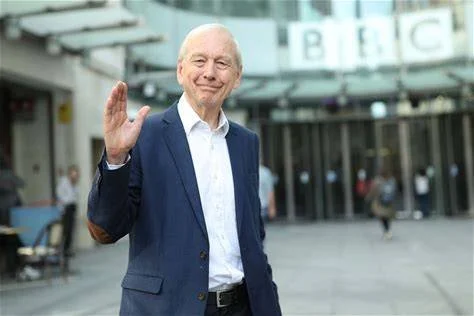
John Humphreys, outside the BBC