
"At 60, you're not getting older. You're becoming more valuable."
I'm 60. Please stop marketing to me like I've retired from life.
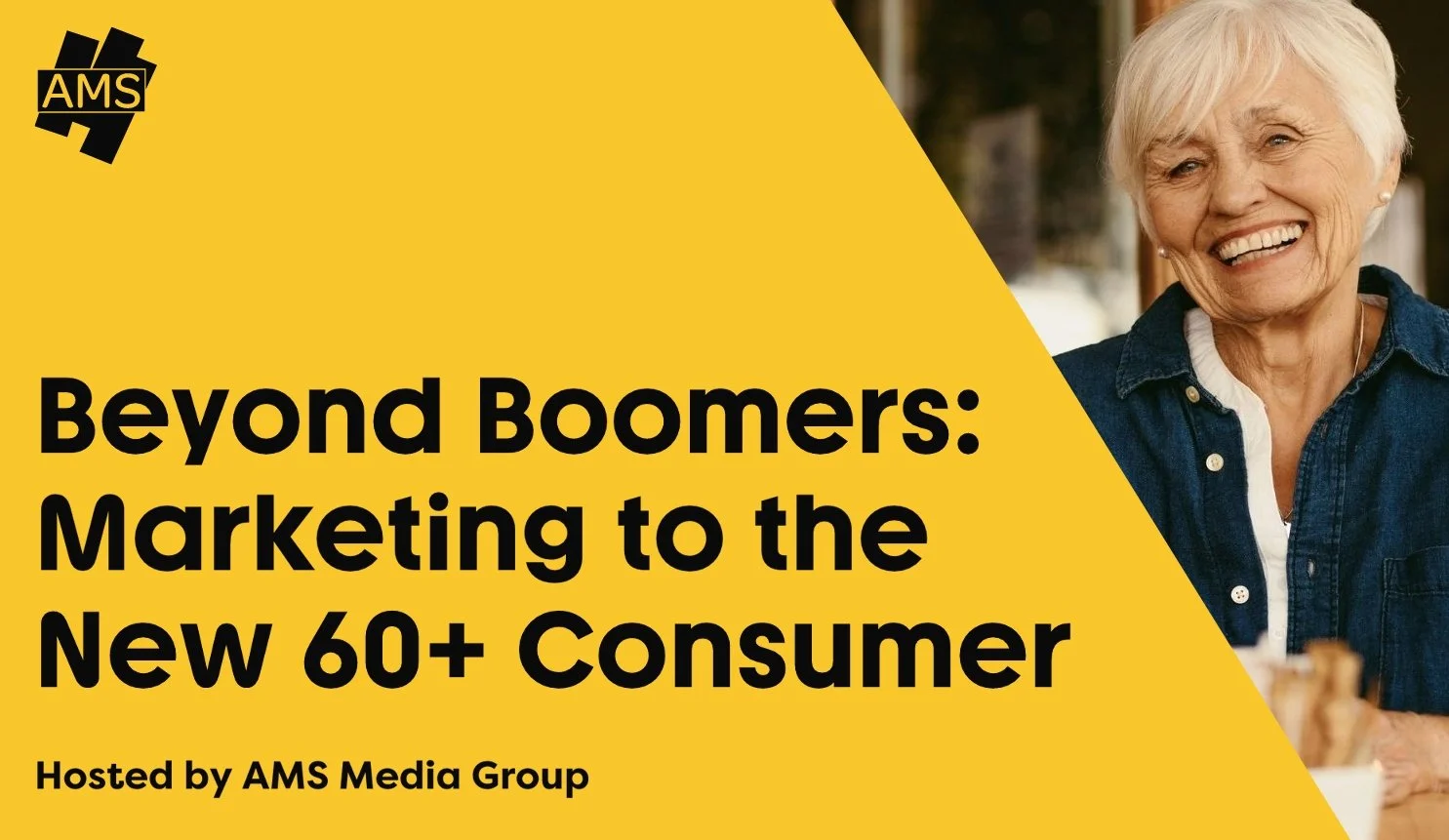
I sat in a workshop yesterday and felt something I don't feel often at industry events: seen. It was called Beyond Boomers: Marketing to the New 60+ Consumer, hosted by AMS Media Group, and it landed differently for me than most sessions do. I'm not just advising clients on this audience. I am this audience. I turned 60 this year, and the marketing that lands in my inbox is embarrassing — for the brands sending it, not for me.
Stairlifts before I've even asked about my knees. Funeral plans wedged between offers for cruises "for the more sedate traveller." A tone that says we've filed you under decline. Meanwhile I'm running a business, travelling, learning new things, and, according to the very brands patronising me, sitting on a disproportionate share of the UK's wealth. It doesn't add up. And it isn't just bad manners. It's bad marketing.
So it was a relief to spend a morning with people who get it. Thank you to Collette Symonds and Amanda Collins at AMS for bringing 50 young years of combined experience and proper insight to the room, and to Verity Kick from Humfree and Jennette Carder from Stannah for a fireside chat that was honest about what works, what doesn't, and what they're still figuring out. It was well run and well evidenced, which is rarer than it should be.
A few people doing this properly
A few organisations and people ding this well that are useful to follow.
Noon, founded by Eleanor Mills, has done more than most to shift how we talk about women in midlife. She coined the term "Queenager," and the research Noon ran with Accenture showed this group controls the majority of household spending decisions while remaining largely invisible in advertising. It's a good example of building a community first and letting the commercial case follow.
The Silver Marketing Association deserves a mention too. Their Age Without Limits campaign, run with the Centre for Ageing Better, has spent three years tackling ageism in advertising properly — not one clever ad, but sustained, evidenced, industry-facing work. That's the kind of graft this space actually needs.
And the Centre for Ageing Better keeps doing the unglamorous work of holding employers, advertisers and policymakers to account on age inclusion. None of this is a fringe interest. It's overdue correction to a market that's both large and largely ignored.
What the numbers actually say
AMS brought the data, and it's worth sitting with for a minute. The over-60 audience in the UK isn't a rounding error. It's the market.
The 60+ population is 27% of the UK, around 19 million adults, and holds a disproportionate share of the country's wealth. 72% own their home outright, against just 7% of 18–34 year olds.
That's roughly £400 billion in disposable income.
And only 5–10% of marketing budgets are spent trying to win this audience over.
A quarter of the population, a huge chunk of the spending power, and a fraction of the marketing attention. That's not a niche opportunity sitting quietly in the corner. That's a strategic blind spot most brands are choosing not to look at.
Five things every marketer and comms person should take from this
The budget gap is the opportunity. If your media plan puts single digits behind an audience holding £400bn in disposable income, that's not a strategy, it's an inherited habit nobody's questioned in years.
This audience isn't hard to reach, it's differently reached. Media habits have moved on more than people assume, with real growth in digital, on-demand video and podcasts alongside still-strong traditional media. A test-and-learn approach across channels will beat a default to TV every time.
Trust works differently here, and it's earned, not bought. This group trusts TV, print, radio and magazines well above average, and trusts social media and online video well below it — pretty much the opposite of younger audiences. Port a Gen Z channel strategy onto this group and you're optimising for the wrong signal entirely.
The "silver surfer" stereotype is just wrong. This audience banks online more than younger groups, checks the weather daily, books travel online, and is more likely to post on Facebook than an 18–34 year old. They're digitally fluent. Creative that treats that as a surprise will read as condescending, because it is.
Values beat discounts. This group over-indexes on buying local and paying for quality, and under-indexes on waiting for sale dates. They're not sitting there waiting for a discount code. They're weighing up trust, quality and whether a brand actually stands for something. Speak to that, not to urgency.
Where I come in
Engaging an audience this size and this valuable right isn't about a single "over-60s campaign" bolted onto an existing strategy. It's about finding the voices this audience already trusts, understanding where their attention genuinely sits, and building comms that earn belief rather than demand attention. If you're a brand or comms team trying to work out how to do right by this audience, and do well by it commercially, I'd love to talk - a genuine Gen X , daughters of Boomers & Marketing & Comms professional - still at your service.